Beyond the Model: The Enterprise AI Architecture Shift Every C-Suite Leader Must Make
Over the last two years, it has become almost impossible to attend a board meeting, industry conference or executive strategy session without artificial intelligence dominating the conversation.
Every organization is asking similar questions:
Which AI model should we use? Where should we begin? How do we manage risk? When will we see a return on our investment?
These are all valid questions. But I increasingly find myself steering the conversation in a different direction.
If you deployed an AI agent tomorrow, what meaningful work could it actually complete inside your organization?
That question usually changes the room.
Most organizations have spent the last two years evaluating what AI can understand, analyse or recommend. Far less attention has been given to what AI can actually do within the business.
There is an important distinction between the two. Generating an insightful recommendation has value. Turning that recommendation into a completed business process is where measurable value is created.
That is also where many enterprise AI initiatives begin to stall.
The challenge is no longer simply the intelligence of the models. It is the readiness of the business around them.
We Spent Twenty Years Connecting Systems. Now We Must Connect Intelligence to Action.
For much of the past two decades, digital transformation focused on modernising platforms, improving processes and connecting enterprise systems.
Organizations upgraded ERP platforms, implemented CRM solutions, migrated workloads to the cloud, invested in data lakes and automated linear business processes. These investments created more efficient enterprises and laid the foundation for the AI transformation taking place today.
What has changed is the nature of the next transformation.
AI does not simply consume data. To create real business value, it must participate in work.
An AI agent may need to retrieve information, initiate workflows, update systems, collaborate across applications and make routine operational decisions within clearly defined guardrails.
That is a fundamentally different architectural requirement.
An agent might identify a promising sales opportunity, summarise a complex legal contract or flag a potentially fraudulent transaction. But those insights create little business value until something happens next.
Someone or increasingly, something must update the CRM, trigger the appropriate workflow, create a service ticket or halt the payment.
“Intelligence without execution is a demonstration. Intelligence connected to execution can transform a business.”
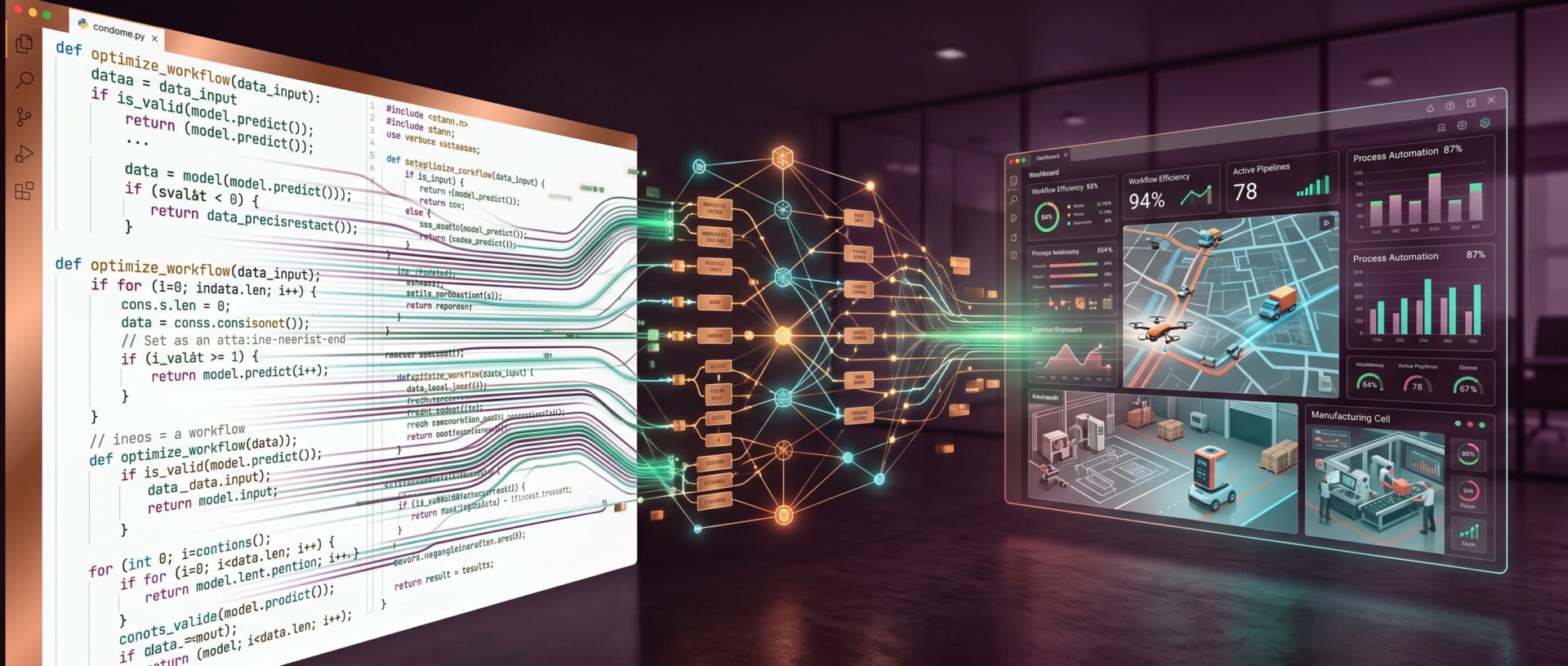
This is why the enterprise AI conversation is gradually moving beyond model selection and towards enterprise architecture.
APIs Are Becoming the Execution Layer for Enterprise AI
For years, APIs were largely viewed as technical plumbing. They helped applications exchange information and allowed developers to integrate one system with another.
Most business leaders rarely needed to think about them.
AI changes that equation.
Every meaningful AI capability eventually needs a secure way to interact with the digital architecture of the business. An AI agent may need to retrieve customer histories, verify identities, access inventory, create support tickets or update financial records.
None of these actions happen simply because a large language model is intelligent. They happen because enterprise systems expose trusted capabilities in a secure, governed and predictable way.
APIs have therefore evolved from integration tools into a critical execution layer for enterprise AI.
The idea of the “API economy” also deserves to be reconsidered. It is no longer only about connecting applications. It is about how organizations package and expose their core business capabilities so they can be used securely by employees, customers, partners and AI agents.
The companies that master this will not only operate more efficiently. They will be able to adapt their processes, products and customer experiences far more quickly.
The Next Workforce Will Not Be Entirely Human
One mental model I often encourage clients to consider is this: over the next five years, your workforce will not consist solely of employees. It will increasingly include autonomous software.
We are already seeing early examples.
AI agents are scheduling meetings, generating software code, triaging customer support requests, monitoring infrastructure and coordinating multi-step workflows.
As these capabilities mature, the question will no longer be whether AI can assist employees. The question will be how organizations manage a blended workforce in which people and autonomous digital workers operate together.
Viewed through this lens, APIs become far more than integration technology. They become the common language through which people, applications and AI agents interact with the enterprise.
Organizations preparing for this shift are not simply deploying isolated AI tools. They are building a digital operating model that allows intelligence to move safely across the business and take action where appropriate.
Why the Model Context Protocol Matters
This is also why emerging architectural standards such as the Model Context Protocol, or MCP, are receiving so much attention across the technology ecosystem.
Traditional APIs generally assume that a software developer will read the documentation, write custom code and test the integration.
AI agents operate differently.
They need a standardised way to discover available tools, understand what those tools can do and interact with enterprise systems safely. They must be able to identify the correct capability without relying on a developer to create a new, custom integration for every task.
MCP does not replace APIs. It provides a common way for AI systems to discover and use the capabilities that APIs make available.
If APIs standardised how applications communicate with one another, MCP may help standardise how AI models and agents interact with enterprise tools and data.
Whether MCP ultimately becomes the dominant industry standard is almost beside the point. The broader direction is already clear.
Forward-thinking organizations are beginning to design digital capabilities not only for software developers, but also for autonomous AI systems.
That represents a significant shift in enterprise AI architecture – one that many organizations have not yet fully considered.
The Organizations That Win With AI Will Think Differently
A common misconception is that enterprise AI success depends primarily on choosing the right foundation model.
Model selection certainly matters. However, as the technology becomes more widely available, access to a powerful model is unlikely to remain a lasting competitive advantage.
The larger differentiator will be the enterprise itself.
Can your systems expose trusted business capabilities securely?
Can an AI agent retrieve reliable information without creating data-leakage or governance risks?
Can business processes be completed without employees manually bridging gaps between disconnected systems?
Can new AI capabilities be introduced without months of custom integration work?
These questions have less to do with model intelligence and far more to do with enterprise architecture, data maturity and organizational design.
The companies best positioned to benefit from AI will not necessarily be those with the largest AI budgets. They will be the organizations that have invested in clean architecture, reusable services, reliable data, strong governance and digital platforms that make automated execution possible.
Enterprise AI Readiness Starts With the Operating Model
When clients ask whether they should invest more heavily in modernising their APIs and data architecture, my response is often that they are starting with the wrong question.
Instead, I ask them to imagine adding a thousand AI agents to their organization next year—not basic chatbots, but autonomous digital workers capable of completing meaningful business tasks.
Could those agents retrieve trusted information?
Could they execute transactions?
Could they interact safely with core business systems?
Could they operate within governance policies that leadership would genuinely trust?
Could the organization trace what they had done, understand why they had done it and intervene when necessary?
If the answer is no, the primary obstacle may not be your AI strategy. It may be your digital operating model.
That is where the next wave of transformation is taking shape.
“The first era of digital transformation connected systems. The next era will connect intelligence to execution.”
The companies that lead the enterprise AI era will not simply have access to the smartest models. They will have built organizations that AI can safely and effectively operate within.
Is Your Enterprise Architecture Ready for AI Agents?
Before investing in another proof of concept, organizations should assess whether their APIs, data, workflows and governance structures are ready to support AI-driven execution.
At Neutrino, we help organizations examine the architecture behind their AI ambitions, identify the gaps between intelligence and execution, and build a practical path towards enterprise AI readiness.
Speak with Neutrino to assess whether your digital operating model is ready for the next generation of AI.
Related Posts
-

India AI Impact Summit — Reflections
May 5, 2026 -
Making AI less ‘Human’ and more useful
September 15, 2020 -
THE PARADIGM SHIFT OF BUSINESS TRANSFORMATION
March 18, 2018 -
The Myth of Persona
April 14, 2016